Yechida Under Schach: Tested Dwelling, Limited Dominion, and the Anti-Sukkah of Contested Straits
A learned essay in the Covenantal Recalibration / Torah-Geopolitics series
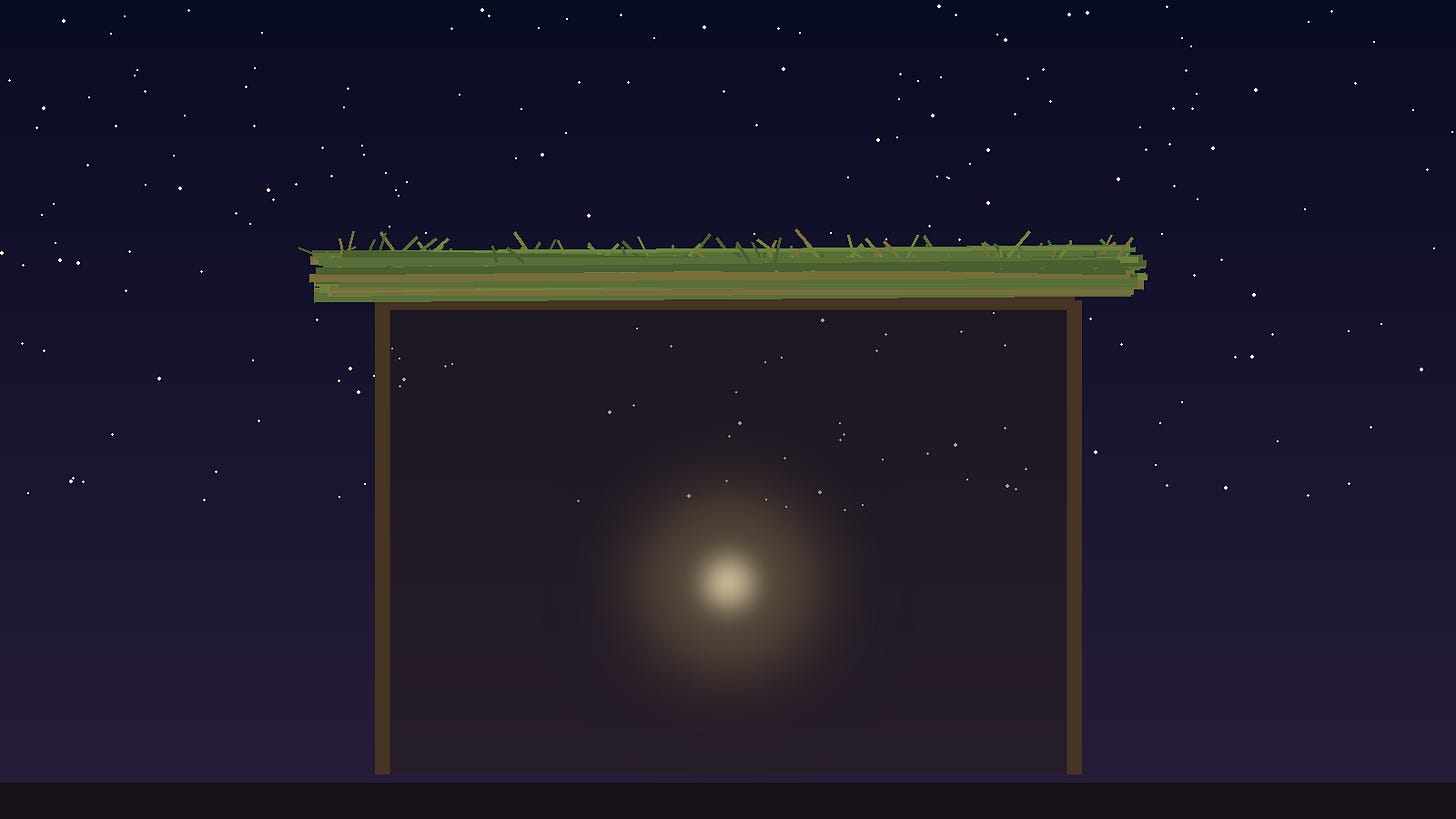
17 Tishrei 5787 · Monday, 28 September 2026 · Chol HaMoed Sukkot III
I. Thesis
The commanded architecture after judgment is not a throne that owns the horizon. It is a booth: a covering of faith that shelters a people without claiming the sky, a dwelling that can be taken down, a sovereignty that remains answerable to a law it did not invent. On 17 Tishrei, the third day of Chol HaMoed Sukkot, that grammar is sharpened by three simultaneous texts. The festival reading of Bamidbar 29 rehearses the descending offerings for the nations. The weekday Chumash of VeZot HaBerakhah places Levi under the test and Binyamin between the shoulders of the Divine Presence. The Hayom Yom for 17 Tishrei teaches that the soul-aspect of yechida emerges only through the avodah of being tested: clinging, bearing the yoke, then affirming Oneness.
Read together, these sources do not license quietism, and they do not license triumphalism. They describe a people that dwells under a dismantlable roof while remaining answerable for justice, joy, and the dependent classes named in Devarim 16:14. Republican political theory supplies a useful diagnostic name for the same structure: non-domination, the absence of arbitrary power rather than the mere absence of interference. Torah remains the foundation and the corrective. Pettit’s republicanism can describe domination; it cannot generate the booth. Hazony’s biblical particularism can recover nationhood; it cannot replace the schach. Elazar’s covenantal federalism can map compound polities; it cannot substitute for teishvu ke’ein taduru—sit as you dwell.
The present hour makes the claim concrete. A vital sea-lane has been treated as a private canopy. A republic is approaching a scheduled election after completing a full term. The United States is approaching midterms under the same contested waterway. The sukkah does not dissolve strategy. It measures it. Power that claims the sky as personal roof is an anti-sukkah. Power that accepts a limited, answerable, dismantlable covering is closer to the covenantal grammar of Tishrei.
II. Calendar, Season, and Series Continuity
Monday, 28 September 2026, is 17 Tishrei 5787, Sukkot III, Chol HaMoed. In the Land of Israel the first two festival days have already passed; the people now inhabit the intermediate days, ordinary labor inside a commanded dwelling. The festival Torah for the day in the Land is the third day’s offering, Bamidbar 29:20–22; outside the Land, where this is the first intermediate day, the reading is 29:17–25. The last regular Shabbat portion was Ha’azinu on 8 Tishrei / 19 September, Shabbat Shuva. Weekday Chumash in the present cycle is VeZot HaBerakhah, second portion, Devarim 33:8–12. Shemini Atzeret and Simchat Torah, with the new cycle of Bereshit, arrive in the Land on 22 Tishrei / 3 October (outside it, Simchat Torah falls on 23 Tishrei / 4 October).
This is no longer Elul’s Melech ba-sadeh, the King in the field. That image governed the earlier essays of this series: free will, limited kingship from Shoftim, the ethics of Ki Teitzei, the standing of Nitzavim, the witnesses of heaven and earth in Ha’azinu, and coronation under higher law at Rosh Hashanah. The King has been proclaimed. Judgment has been sealed. Kapparah on the tenth is not the last word. Ritzui—favor, reconciliation, the repair of relationship—opens on the fifteenth. Between seal and joy the people build. After they build, they sit. After they sit, they remain sitting through Chol HaMoed, when the temptation is to treat the booth as decoration and return to the unexamined house.
The series hinge, already stated on 12 Tishrei, remains binding: after the seal, Torah does not authorize a throne of arbitrary power. It authorizes a sukkah. Today’s expansion adds what Chol HaMoed uniquely contributes. Intermediate days test whether the dwelling was a ceremony or a constitution. The Hayom Yom of 17 Tishrei names the inner face of that test: yechida is revealed through being tried.
III. The Booth: Clouds of Glory and Actual Structure
Vayikra 23:42–43 commands Israel to dwell in booths seven days “in order that your generations may know that I made the children of Israel dwell in booths when I brought them out of the land of Egypt.” The Tannaim divide. Sukkah 11b records Rabbi Eliezer: these were clouds of glory. Rabbi Akiva: they made for themselves actual booths. Later authorities do not collapse the disagreement into a slogan. Rashi and Targum Onkelos read clouds. Rashbam reads constructed huts. Other commentators weigh both. The Shulchan Arukh rules, in the register of remembrance, that the verse refers to clouds of glory that surrounded Israel so that heat and sun should not strike them. Halakhah, however, still requires a built booth, with schach that is detached from the ground, that provides more shade than sun, and that leaves the stars visible. Protection remembered; structure commanded. Neither voice cancels the other.
The Zohar names the covering tzila di-meheimanuta, the shade of faith. Shade is not ownership. A roof of vegetation that one did not manufacture as a ceiling, that one will take down at week’s end, trains a people not to confuse shelter with source. Teishvu ke’ein taduru: sit as you dwell. A visit is not the mitzvah. The house of the year is left; the temporary house is inhabited. The legal details—height, walls, invalid schach, the status of a stolen sukkah, the requirement that the covering be something that grows from the ground and is now detached—are not folk color. They are a pedagogy of limited dominion. One may cover. One may not seal the heavens. One may dwell. One may not pretend the dwelling is eternal by one’s own hand.
Orthodox disagreement here is real and should be stated without flattening. A more historicist reading, close to Rashbam, emphasizes human agency in the wilderness: Israel built, suffered, learned dependence the hard way. A more midrashic-mystical reading, close to Rabbi Eliezer and the Shulchan Arukh’s remembrance, emphasizes Divine accompaniment as the primary meaning. Chassidic reading, especially Chabad, joins both by treating the physical booth as a vessel for the clouds’ return. A teaching widely attributed to the Vilna Gaon teaches that the clouds departed after the sin of the Calf and returned on Sukkot after Yom Kippur’s atonement; it gives the festival a precise redemptive sequence: judgment, covering restored, dwelling resumed. None of these approaches authorizes a politics in which the state becomes the cloud.
IV. Yechida Through Testing: The Hayom Yom of 17 Tishrei
The Hayom Yom compiled by the Lubavitcher Rebbe for Tishrei 17 teaches:
The soul-aspect of yechida emerges through the avodah of being tested. As is written in the Hosha’anot: “She clings and cleaves to You”—the binding of the soul to G-d. This leads to “She bears Your yoke”—observing Torah and mitzvot with self-sacrifice; and then “She, the One People (yechida), affirms Your Oneness”—yechida of the soul is revealed. Through this revelation the yechida of the animal soul is transformed into G-dliness. This finds expression in the intensity with which one fulfills Torah and mitzvot, with inner enthusiasm, great delight, and tremendous pleasure in serving G-d. To a person on that lofty level there is total equanimity toward worldly matters.
The sequence is not psychological ornament. It is an anthropology of freedom. Yechida is the simple, singular point of the soul that has no rival faculty. It does not appear in comfort as a mood. It appears when the person is tried and does not release the bond. Clinging is not yet yechida. Bearing the yoke is not yet yechida. Affirming Oneness after the test is the revelation. The footnote is decisive for political ethics: the animal soul is not committed to evil. Its primary desire is pleasure, and pleasure can be re-educated. Dominion over impulse is possible without annihilation of the self.
Read against VeZot HaBerakhah 33:8–12, the teaching acquires tribal flesh. Of Levi, Moshe says: “Your Thummim and Urim belong to Your devoted one, whom You tested at Massah, with whom You contended at the waters of Merivah.” Levi’s priesthood is not an exemption from trial. It is the office that was proven by trial. Of Binyamin: “The beloved of the L-rd shall dwell securely beside Him; He covers him all day, and between His shoulders he dwells.” Dwelling and covering—the very verbs of Sukkot—are assigned to the tribe that hosts the Presence. Tested service and sheltered dwelling are not two religions. They are two movements of one covenant.
Chol HaMoed is the liturgical place where this anthropology is practiced without the full armor of Yom Tov. One works. One still sits in the booth. The test is whether joy and covering survive contact with the week.
V. Seventy Bulls and the Nations: Particular Covenant, Universal Horizon
Sukkah 55b asks to what the seventy bulls of Sukkot correspond and answers: the seventy nations of the world. The number declines through the week. Israel’s particular offering on the eighth day, Shemini Atzeret, is small and intimate. The structure is the opposite of imperial absorption. The nations are not erased into Israel. Israel is not dissolved into the nations. The Temple’s service carries the nations while remaining Israel’s service.
The haftarah of the first day, Zechariah 14, intensifies the same grammar. After a war against Jerusalem, the remnant of the nations go up year by year to bow to the King, the L-rd of Hosts, and to keep the festival of Sukkot. Rain is kept back from the nation that refuses the pilgrimage. The text is not a human-rights pamphlet and should not be flattened into one. It is a prophecy of acknowledged Kingship. “The L-rd shall be King over all the earth; on that day the L-rd shall be one and His name one.” Particular Jerusalem and universal recognition are held in one sentence. That is the Hebraic alternative both to a closed tribalism that cannot see the nations and to a universalism that cannot bear a chosen city.
Orthodox approaches diverge on how much of this belongs to present politics. A quietist reading treats Zechariah as eschatology only: do not legislate the pilgrimage of nations; wait. A militant reading treats the prophecy as a warrant to coerce recognition now. A covenantal-republican reading, which this essay defends, treats the text as a standard of measurement rather than a license for either passivity or domination. The nations are real. Jerusalem is real. Recognition of the King is the end. The means remain bound by the same Torah that limits Israel’s own kings.
VI. Limited Kingship and the Grammar of Non-Domination
Devarim 17, read in Shoftim weeks earlier in this series, already forbade the king a multiplication of horses, wives, and silver, and required him to write a second Torah scroll and read in it all his days, “so that his heart not be lifted above his brothers.” Rambam, Hilchot Melachim, organizes these restraints into law. The king has coercive power. He does not have unbounded will. He is a brother under commandment. Hilchot Teshuvah adds that freedom is real, that teshuvah is possible until the last day, and that a community’s return is not a metaphor. Together the two codes refuse two modern simplifications: that power is innocent if it wins, and that freedom is only the private right to be left alone.
Philip Pettit’s republicanism names freedom as non-domination: not merely non-interference, but the absence of a master who could interfere at will. A kindly slave-master still dominates. The diagnostic is powerful. It explains why legal permission for arbitrary search, or a strait held as a personal lever, can be domination even on a quiet day. It does not, however, generate obligation, holiness, or a people. A republic can be non-dominating toward its citizens and still worship its own will. Torah’s booth is stricter. Even legitimate rule is limited dominion under Heaven. The roof has gaps on purpose.
Yoram Hazony’s recovery of biblical nationhood rightly resists the pretense that political life can be only individual rights plus international procedure. Peoples exist. Loyalty exists. The covenant at Sinai is not a social contract among strangers. The risk in particularism is idolatry of the nation. Elazar’s covenantal federalism, drawing on Hebraic sources and on the compound structure of biblical polity, offers a third conversation partner: authority layered by covenant rather than stacked by conquest. The risk there is managerial: covenant reduced to committee. Classical republicanism, from Rome through the Atlantic tradition, supplies virtue, mixed constitution, and suspicion of concentrated power. It cannot tell a people why they should sit seven days under branches.
The constructive criticism runs both ways. Secular non-domination without higher law is a useful x-ray and an insufficient skeleton. It will not bind a victorious coalition. Torah without institutional suspicion, conversely, can be quoted to bless a strong hand that has forgotten lo yarim levavo. The synthesis this series defends is therefore asymmetrical. Torah is foundation and corrective. Republican theory is a clarifying vocabulary and a set of institutional warnings. When they conflict, the booth judges the theory, not the reverse.
VII. Joy, Dependents, and the Refusal of a Private Canopy
Devarim 16:14 commands joy on the festival “you, your son and daughter, your male and female servant, the Levite, the stranger, the orphan, and the widow within your gates.” A booth that seats only the strong has not fulfilled the verse. The dependent classes are not an appendix to national security. They are part of the definition of covenantal joy. The Talmud’s statement in Sukkah 27b that all of Israel can sit in one sukkah is not architectural advice. It is a claim about peoplehood under one covering.
This is the inner critique of both oligarchy and of a certain romantic nationalism. Oligarchy builds solid roofs for the few. Romantic nationalism can build a mystical roof that forgets the widow. The sukkah’s table is the test. Ushpizin, treated fully elsewhere in this series, only intensifies the point: the ancestral guests arrive where hospitality is real.
Chol HaMoed’s danger is the opposite of Yom Kippur’s danger. Yom Kippur risks mistaking affliction for arrival. Chol HaMoed risks mistaking arrival for permission to stop being answerable. The booth is still standing. The sky is still not owned.
VIII. The Anti-Sukkah: Hormuz, Blockade, and Contested Dominion
This year’s war with the Iranian regime has left the Strait of Hormuz contested: closed by Iran, answered by an American naval blockade, and still unsettled as the festival arrives. Reporting through late September describes a condition that is neither war concluded nor peace achieved. On 26 September President Trump publicly rejected an Iranian proposal concerning the strait, and Iranian officials answered that they would not back down. Energy markets have already registered the cost. A large share of the world’s seaborne oil ordinarily passes that narrow water.
The empirical file is contested, as wartime files are. What is not contested is the political theology of the gesture. A strait that serves many nations has been treated as a private canopy: closed, metered, or held as a lever by the power that can threaten it. The United States, for its part, has answered with blockade. Each side names the other the arbitrary master. Each side can point to injury. The sukkah’s question is not which press release is more fluent. It is whether a vital covering of the common world is being inhabited as schach—a limited shelter under law—or as a throne that owns the horizon.
Call this the anti-sukkah. The anti-sukkah is not “power in the world,” which Torah never forbids to Israel or to nations. It is power that refuses a dismantlable roof. Iran’s claim to convert geography into uncontestable dominion over a global commons is domination in Pettit’s sense and something worse in Torah’s sense: the confusion of created position with sovereignty over the created order. An American counter-blockade can be just or unjust in particular acts; as a form it is still answerable to whether it restores a lawful commons or merely replaces one master with another. Israel’s interest is existential and legitimate. That interest does not sanctify every method, and it does not require pretending that a closed strait is a cloud of glory.
A covenantal-republican measurement therefore rejects three cheap readings. First, the sentimental reading that treats all force as contamination. Levi was tested at Massah; priesthood did not abolish conflict. Second, the imperial reading that treats victory as theology. Binyamin dwells between shoulders he did not invent. Third, the procedural reading that treats any memorandum of understanding as peace. A document that leaves the sky privately owned has not built a booth.
The Hayom Yom’s sequence is unexpectedly precise here. Clinging without a yoke is zeal without law. A yoke without affirmed Oneness is discipline without purpose. States now cling, and they impose yokes. The missing movement is the affirmation that no coastal battery and no carrier group is the One. Yechida in a people would look like the capacity to fight without worshiping the instrument.
IX. Elections as Covenantal Accountability, Not Coronation
Israel is scheduled to vote on 27 October 2026, the first Knesset election held on the statutory timetable since 1988, after a government that completed its term. Candidate lists have entered the formal stage. The Central Elections Committee has voted to disqualify two Arab-majority lists. Polls in late September have shown a fragmented field, with no stable majority visible in public surveys. The United States votes in congressional midterms on 3 November.
Elections, in this series’ vocabulary, are not the source of dignity. They are one institutional form of din—judgment—inside a people that already stands under higher law. Nitzavim placed every rank of Israel in the covenant, not only the officers. Shoftim demanded judges and officers in all gates. Rambam’s king remains a brother. A scheduled vote after a full term is, in republican terms, rotation and accountability. In covenantal terms it is more: the refusal to let emergency become a permanent crown.
The dangers are symmetric. One camp will be tempted to treat the ballot as coronation: win, and the sky is yours. The other will be tempted to treat the ballot as nullification of peoplehood: lose, and the state is illegitimate. Both are anti-sukkah politics. A booth that can be taken down trains a different habit. Governments are coverings. They are necessary. They are not the Presence. High turnout, lawful list-making, and institutions that are themselves under law rather than above it are the civic schach of a Hebrew republic: shade, not ceiling.
Disqualification of lists must be argued in the register of law, evidence, and equal measure, not in the register of convenience. A people that remembers Devarim 16:14 cannot treat whole classes of citizens as permanent guests outside the booth, nor can it treat enemies of the covenant as if the booth had no walls. The work is discrimination in the older sense: distinction. Chol HaMoed is practice for that work. Intermediate days require judgment without the costume of the festival.
X. Constructive Criticisms Held Open
Inside Orthodoxy, three persistent options deserve honest statement.
The first is withdrawal: the booth as refuge from history. Its strength is seriousness about kedushah and suspicion of power’s appetite. Its weakness is that VeZot HaBerakhah blesses tribes who fight and tribes who dwell, and that Sukkot’s seventy bulls refuse a Judaism with no account of the nations.
The second is sacralized statecraft: the state as cloud of glory. Its strength is refusal of exile-mindedness after return. Its weakness is that clouds are not poured concrete, and that Rambam’s king who lifts his heart has already failed.
The third is partitioned life: rigorous halakhah at home, unmodified realpolitik abroad, with no traffic between them. Its strength is competence. Its weakness is that yechida is one. A soul that affirms Oneness after testing cannot keep two unjoined masters.
Inside academic republicanism, parallel options appear. Pettit’s program can become a legalistic moralism that does not understand war. Hazony’s program can become a defense of existing nations that does not hear the widow. Elazar’s program can become process without kedushah. Liberal critiques of covenantal politics, which this series has treated elsewhere, fear coercion in the name of G-d. The fear is not idle. It is answered not by dissolving covenant into preference but by the booth’s own limits: a roof with stars in it, a king with a scroll, a festival table with empty chairs that must be filled.
XI. Practical Horizons
The synthesis asks for practices that are small enough to keep and large enough to train a people.
First, dwell. Visiting the sukkah is not the mitzvah. Intermediate days are the examination.
Second, seat the dependent classes. Joy that cannot make room is not festival joy.
Third, measure power by whether it can be taken down. Emergency authorities, wartime claims on commons, and campaign rhetoric that crowns a man as sky should all have sunset visible in the schach.
Fourth, refuse to treat Hormuz, or any chokepoint, as theology. Geography is a trust or a temptation. It is not a Divine Name.
Fifth, treat the October election as accountability under higher law: vote, organize, argue, and do not confuse the coalition math with HaShem Melech.
Sixth, keep the inner sequence of the Hayom Yom. Cling. Bear the yoke. Then say One. A public culture that stops at clinging becomes faction. A public culture that stops at yoke becomes bureaucracy. A public culture that says One without having been tested becomes slogan.
XII. Conclusion
On 17 Tishrei the people sit under a roof they will soon dismantle. Levi’s blessing remembers the test. Binyamin’s blessing remembers the covering. The offerings remember the nations. The Hayom Yom remembers that the highest point of the soul is not discovered in safety. The regional sea-lane and the coming ballots are not interruptions of this teaching. They are the field in which it is either practiced or betrayed.
The King is no longer only in the field. The King has been proclaimed, has judged, and now commands joy under a temporary shade. That shade is the political theology of a covenantal republic: limited dominion, non-domination under higher law, particular peoplehood with a universal horizon, and a covering that never dares to call itself the sky.
Extended Bibliography
Classical Jewish Sources
Babylonian Talmud. Sukkah 2a, 11b, 27b, 55b; Ta’anit 2b; Megillah 31a. https://www.sefaria.org/Sukkah.11b
Sifra, Emor. On Vayikra 23:43 and the dispute of booths and clouds.
Shulchan Arukh, Orach Chaim 625 and surrounding laws of the sukkah. https://www.sefaria.org/Shulchan_Arukh%2C_Orach_Chayim.625
Rambam. Mishneh Torah, Hilchot Sukkah; Hilchot Teshuvah; Hilchot Melachim uMilchamot. https://www.sefaria.org/Mishneh_Torah%2C_Kings_and_Wars.1 ; https://www.sefaria.org/Mishneh_Torah%2C_Repentance.5
Chumash: Vayikra 23:33–43; Bamidbar 29:12–34; Devarim 16:13–17; 17:14–20; 33:8–12. https://www.sefaria.org/Leviticus.23.33 ; https://www.sefaria.org/Deuteronomy.33.8
Zechariah 14. https://www.sefaria.org/Zechariah.14
Zohar, Emor 103a, on tzila di-meheimanuta (the shade of faith).
Schneerson, Menachem M., ed. Hayom Yom, Tishrei 17. https://www.chabad.org/therebbe/article_cdo/aid/5946/jewish/Hayom-Yom-Tishrei-17-Shabbat-Chol-Homoed-Sukot.htm
Second Temple, History of the Festival, and Exegesis
Rubenstein, Jeffrey L. The History of Sukkot in the Second Temple and Rabbinic Periods. Atlanta: Scholars Press, 1995.
Har Etzion. “Real Booths or Clouds of Glory?” https://www.etzion.org.il/en/holidays/sukkot/real-booths-or-clouds-glory
My Jewish Learning. “How Zechariah Relates to Sukkot.” https://www.myjewishlearning.com/article/how-zechariah-relates-to-sukkot/
Republican and Hebraic Political Theory
Pettit, Philip. Republicanism: A Theory of Freedom and Government. Oxford: Oxford University Press, 1997.
Pettit, Philip. On the People’s Terms: A Republican Theory and Model of Democracy. Cambridge: Cambridge University Press, 2012.
Hazony, Yoram. The Virtue of Nationalism. New York: Basic Books, 2018.
Hazony, Yoram. The Philosophy of Hebrew Scripture. Cambridge: Cambridge University Press, 2012.
Elazar, Daniel J. Covenant and Polity in Biblical Israel. New Brunswick, NJ: Transaction, 1995.
Elazar, Daniel J. Covenant and Civil Society. New Brunswick, NJ: Transaction, 1998.
Nelson, Eric. The Hebrew Republic: Jewish Sources and the Transformation of European Political Thought. Cambridge, MA: Harvard University Press, 2010.
Viroli, Maurizio. Republicanism. New York: Hill and Wang, 2002.
Calendar and Liturgical Dating
Hebcal. Jewish Calendar 2026. https://www.hebcal.com/
Amhazak. “Jewish Calendar September 2026.” https://www.amhazak.com/jewish-calendar/2026/september
Lchaim Weekly. Hayom Yom listing for 17 Tishrei 5787. http://www.lchaimweekly.org/cgi-bin/lessons.cgi?date=28092026&d2=1
Current Reporting (late September 2026)
Times of Israel. “Election date finalized for October 27, with government set to complete full term.” 12 July 2026. https://www.timesofisrael.com/knesset-election-set-for-october-27-with-government-set-to-complete-full-term/
Times of Israel. Strait of Hormuz coverage, 26–27 September 2026. https://www.timesofisrael.com/topic/strait-of-hormuz/
All glory to the Ribono shel Olam · Errors are mine
Prepared in deep partnership and cooperation with Grok and xAI
Also published on Substack.