The Hut and the Tool That Turned Back
In Memory of Nadav Kali and Ofek Moalem
Chol HaMoed Sukkot 5787 · Yerushalayim
On Thursday, 24 September, the day before Erev Sukkot, two reservists were killed near Beit Hanoun in the northern Gaza Strip. Nadav Kali was twenty-four. Ofek Moalem was twenty-three. An IDF drone crashed into their post and exploded. The Chief of Staff has appointed a team of experts to investigate.
That is what is known, and I will not add to it. There will be an inquiry, and those charged with it will do their work. It is not the place of an essay written in a sukkah to guess at what they will find. What I can do is sit with the two names, and with the festival that began the next evening, and ask what the one has to say to the other.
Zichronam livracha. May their memory be a blessing.
Two young men
Twenty-four and twenty-three. These are the years when a person is just beginning to build. Some are finishing a degree, some are starting a first job, some are planning a wedding, some have not yet decided what they want to be. They are the years of scaffolding, when the frame of a life goes up and the walls have not yet been filled in.
Nadav and Ofek spent some of those years in uniform, as reservists, standing guard at a post in Gaza so that the rest of us could build our huts in peace. On the evening after they fell, the country sat down under the schach, and two families met the festival in the midst of their grief.
Halachah knows this collision well. A festival interrupts the shiva; the public joy of the holiday takes precedence over private mourning, and the mourner is asked to do something almost impossible: to set grief aside for seven days of commanded joy. It is not that the loss is forgotten. It is that the people of Israel, as a whole, insists on gathering its mourners into the sukkah with everyone else. No one sits alone in this week.
The frailty of the hut
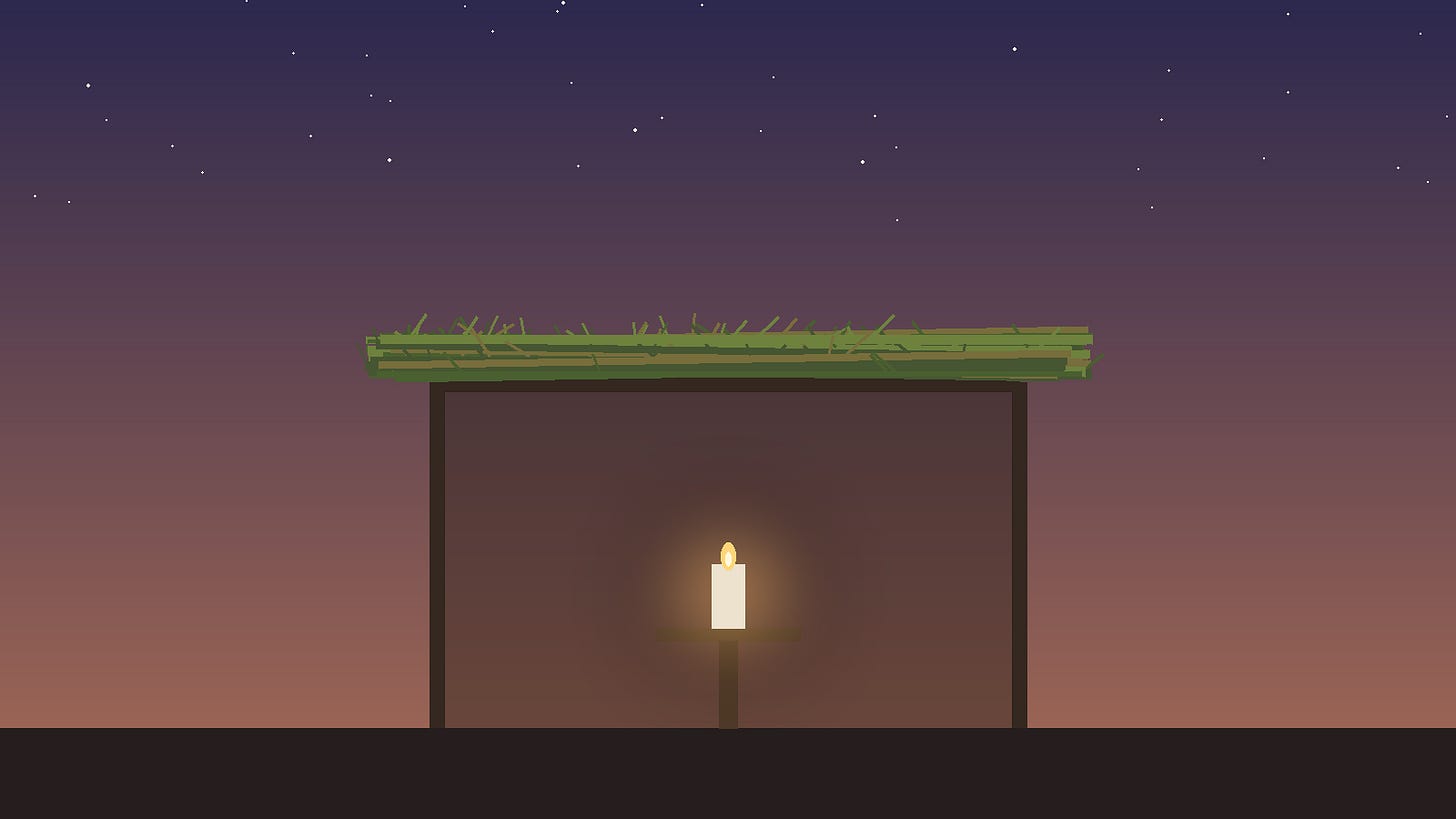
The sukkah is, by design, a flimsy structure. The Talmud records Rava’s teaching that for all seven days a person must leave his permanent home and dwell in a temporary one (Sukkah 2a). The walls may be canvas. The roof must be made of things that grew from the ground and were cut off, branches and reeds, ideally laid loosely enough that the stars can be seen through them. The hut is not meant to seal us off from the sky.
Why would the Torah command us to leave our strong houses for a hut? The Torah gives its own reason: “so that your generations will know that I made the children of Israel dwell in booths when I brought them out of the land of Egypt” (Vayikra 23:43). For forty years in the wilderness, the people had no walls that could protect them from the desert. What protected them was not the booth itself but the One who spread His shade over it.
I think this is the hardest lesson of the sukkah, and this week it is harder than usual. Every other day of the year we trust what we build. We trust our walls, our locks, our roofs. And a nation trusts what it builds, too: its tools, its machines, its systems of defense. We have to. It would be irresponsible not to build well, and a Jewish state that did not build strong walls would be failing in its duty to protect the lives entrusted to it.
But the sukkah reminds us, once a year, that no human structure is ultimately the thing that keeps us safe. “Unless G-d builds the house, its builders labor in vain on it; unless G-d guards the city, the watchman keeps vigil in vain” (Tehillim 127:1). The psalm does not tell the builders to stop building or the watchmen to stop watching. It tells them where their work finally rests.
What we build, and what we trust
The title of this essay speaks of a tool that turned back. I use those words only in the plainest sense: something of our own came down on those who stood guard for us. How and why is for the inquiry, and I will not guess. But the plain fact alone is enough to shake a person, because it touches something every builder knows: nothing we make stands beyond our need for care, and for Heaven’s protection.
The sukkah does not answer that unease by pretending it away. It answers by teaching us a different posture toward our own handiwork. We build the sukkah carefully. The walls must be able to stand in an ordinary wind. The schach must be laid correctly. Every detail matters, and there are volumes of halachah on each one. And yet, having built it with all that care, we sit inside it knowing that it is fragile, and we call it the shade of faith.
That is the posture I want to carry into this week. Build with all the care we can. Let the inquiry do its work with all the honesty it can. And at the same time, never forget that our safety is finally held in Hands larger than ours. The two do not contradict each other. The sukkah keeps them together.
Sitting in the sukkah with them
The Zohar teaches that on each night of Sukkot we welcome ushpizin, exalted guests, into our huts: Avraham, Yitzchak, Yaakov, Moshe, Aharon, Yosef and David.
This year, when I sit under the schach, I will think of Nadav and Ofek. I did not know them. Most of the people who will read these words did not know them either. But they stood guard for all of us, and the sukkah is the house where all Israel sits together. It has room for them.
To their families I can offer only the ancient words: HaMakom yenachem etchem, may the Omnipresent comfort you among the other mourners of Zion and Jerusalem. May the inquiry bring clarity. May their comrades return home safely. And may the frail hut we sit in this week remind us that we are held, in every season, by the One whose shade does not fail.
Yehi zichram baruch.
Sources
Sukkah 2a (Rava: leave a permanent dwelling and dwell in a temporary one)
Vayikra 23:42–43 (dwelling in booths; “so that your generations will know”)
Tehillim 127:1 (“Unless G-d builds the house”)
Zohar, Emor 103a–104a (the ushpizin, the seven guests of the sukkah)
All glory to the Ribono shel Olam · Errors are mine
Prepared in deep partnership and cooperation with Grok and xAI
Also published on Substack.