The Etrog Is Not Tied
Four Species, One Mitzvah, and the Member Carried in the Other Hand
Erev Sukkot · 14 Tishrei 5787 / Fri 25 Sep 2026 · Yerushalayim
Aryeh Leib Thorne Toren · Jerusalem | Pittsburgh Roots · Talmid · covenantal writer
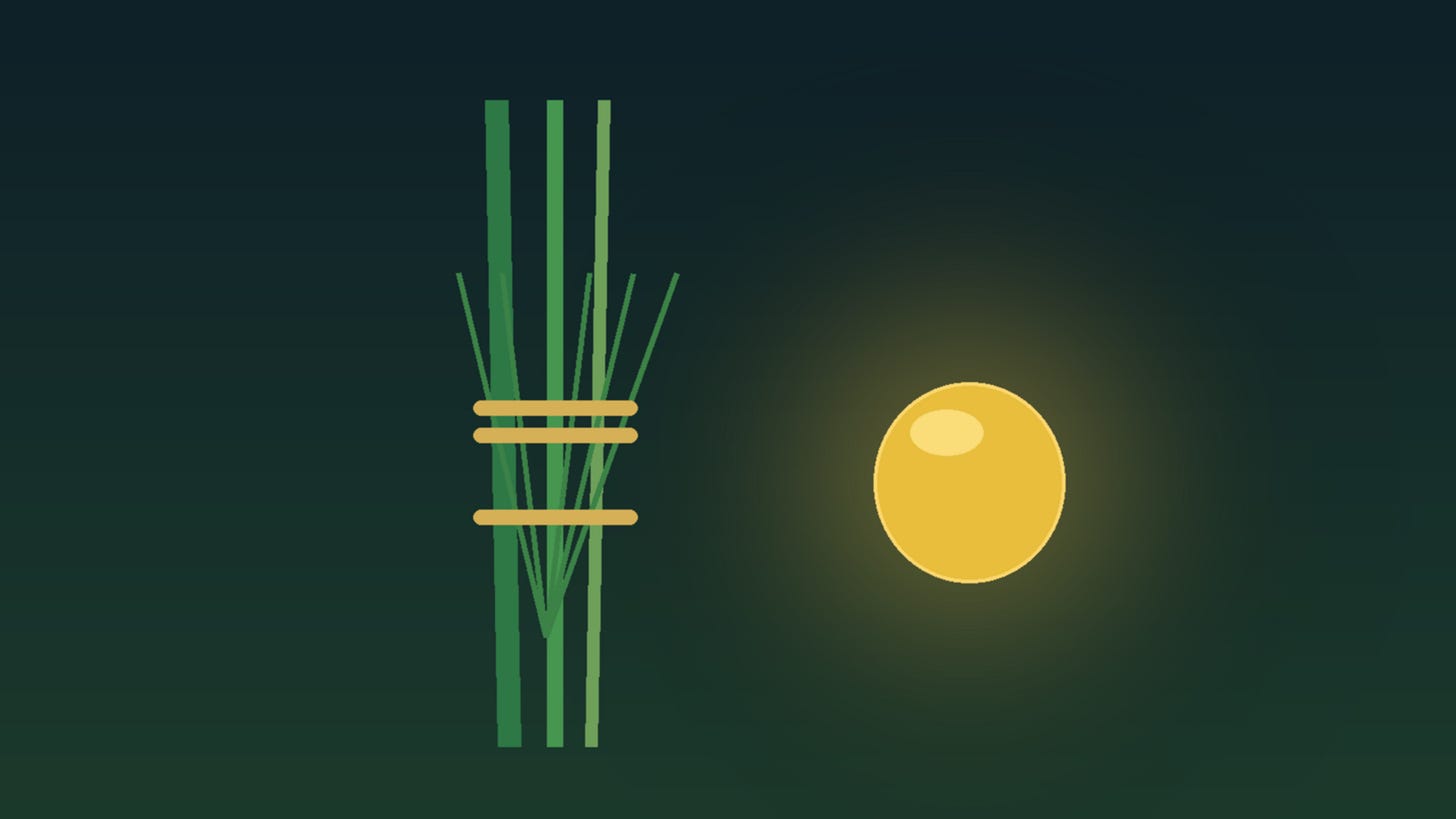
This afternoon, in sukkot across this city, the lulav will be bound. A palm spine, three myrtle branches, two willows, rings of palm leaf tightened around them. Then the bundle will be laid aside for Shabbat, and on Sunday, the first morning of taking in the Land, it will be lifted.
But look at what the binding leaves out. The etrog is not tied.
It sits in its own box, wrapped in flax or silk, and on Sunday it will be taken in the other hand. Three species are bound into one bundle. The fourth — the only fruit, the one the Torah calls pri etz hadar, the beautiful fruit — stays outside the knot. And still the mitzvah is one mitzvah. Without the etrog, nothing has been taken at all.
That small fact of Friday’s work is worth an essay on its own. It says something the familiar sermon about “four kinds of Jews” does not quite reach.
One mitzvah, two hands
The Torah’s command is a single sentence: u’lekachtem lachem bayom harishon — you shall take for yourselves on the first day the fruit of the beautiful tree, branches of palms, boughs of the thick tree, and willows of the brook (Vayikra 23:40). One taking. Four kinds.
The Mishnah makes the unity legal: arba’ah minim she’balulav me’akvin zeh et zeh — the four species of the lulav are each indispensable to the others (Menachot 27a). If one is missing, none of the others counts. The palm without the etrog is not three-quarters of a mitzvah. It is no mitzvah.
Yet the halakhah that makes them indispensable to one another does not make them identical in form. Rambam in the laws of lulav and the Shulchan Aruch (Orach Chaim 651) describe the practice plainly: the palm, the myrtle, and the willow are bound together; the lulav is taken in the right hand; the etrog is taken in the left, and the two hands are brought together so the four are joined in the taking. Unity here is not a single knot. It is two hands meeting.
The fruit that dwells on its tree
Why is the etrog the one left outside the binding? The Talmud does not ask the question in those words, but it tells us what kind of thing the etrog is. Hadar, says Rabbi Abahu, means ha’dar be’ilano mishanah leshanah — the fruit that dwells on its tree from year to year (Sukkah 35a). The other three are branches and leaves. The etrog is a fruit that stays, season after season, through heat and rain, on its own tree.
In a week whose whole grammar is dwelling, the species named for dwelling is the one that is not absorbed into the bundle. It keeps its own form. It does not become a fourth branch. It is carried beside the others, close enough to touch, and the mitzvah is complete only when it arrives.
There is a further custom that sharpens the picture. Before the blessing, many take the etrog upside down, and turn it upright only after the words are said (Shulchan Aruch, Orach Chaim 651). The fruit waits for the blessing to be spoken before it is fully taken. The blessing itself is named not for the etrog but for the lulav — al netilat lulav — because the palm is the tallest of the set (Sukkah 37b). The etrog does not demand the name. It only demands to be present.
Differentiated unity has two forms
Readers of this series already know the midrash of Vayikra Rabbah 30: four species as four kinds of Israel, bound together so that each atones for the other. That teaching is true and it belongs to the binding. This essay does not repeat it. It asks what the unbound member adds.
It adds a second form of unity. There is the unity of the bundle — distinct species tied by a common ring, moving as one shaft. And there is the unity of the two hands — a member who keeps its own shape, is not tied, and yet without whom the whole is void.
A covenant people needs both forms. Some belong in the bundle: shared institutions, shared discipline, the rings that keep a people from falling apart when it is shaken in six directions. Some belong in the other hand: communities, callings, and ways of life that will not and should not be braided into the common shaft, and whose absence would still make the whole taking invalid.
The temptation of every political generation is to believe there is only one form of unity. Either everyone is tied into the bundle, or the bundle has failed. The etrog refutes that. The Torah commands a unity where one member keeps its box, its wrapping, its fragrance, its own hand — and is still indispensable.
Covenant, not merger
This is where covenantal thinking differs from merger. A merger dissolves members into a single body; after the merger, the parts are gone. A covenant binds parties who remain parties. The bond is real and enforceable — me’akvin zeh et zeh — but it does not require the etrog to become a palm.
The American founders understood some of this when they spoke of union without consolidation. The Torah understood it first, and more precisely, in a mitzvah performed by children. A republic under Heaven is not a bundle only. It is two hands brought together before the One who commanded the taking.
And the discipline cuts both ways. The etrog is not free to stay in its box. A fruit that is never brought to the bundle is not a mitzvah either. Distinctness that refuses to join the taking is as barren as unity that refuses to let a member keep its form. The etrog must be lifted, turned upright, and brought close. Its separateness exists for the meeting.
What to notice on Sunday
This year in the Land, the first day of the chag is Shabbat, and the species rest. On Sunday morning the taking begins. When you lift the set, notice the two hands.
Notice that the etrog was never tied, and that nobody thinks it lesser for it. Notice that the blessing names the tallest, while the fullest beauty sits in the other hand without complaint. Notice that the mitzvah happens only when the hands close the distance.
Then carry that into the week. In a family, in a shul, in a country arguing about who belongs in which bundle, the question is not only “are we tied together?” It is also “have we brought the other hand close?”
Kid-table
Three plants are tied together, but the etrog is carried in the other hand.
Even though the etrog is not tied, the mitzvah does not work without it.
“Hadar” means the etrog stays on its tree all year — it is a dwelling fruit.
We bring both hands together so all four are joined when we take them.
Being different is fine; staying away is not. The etrog has to come close.
Sources
Vayikra 23:40
Menachot 27a (the four species are indispensable to one another)
Sukkah 35a (hadar — the fruit that dwells on its tree from year to year)
Sukkah 37b (why the blessing is named for the lulav)
Rambam, Hilchot Lulav, ch. 7; Shulchan Aruch, Orach Chaim 651
Vayikra Rabbah 30 (named once)
All glory to the Ribono shel Olam · Errors are mine
Prepared in deep partnership and cooperation with Grok and xAI
Also published on Substack.