Seven Days and the Seventh Day
A Seven-Day Roadmap, a Festival, and the Shade of Faith
Chol HaMoed Sukkot 5787 · Yerushalayim
This week the world has been counting in sevens.
Iran proposed a seven-day roadmap concerning the Strait of Hormuz. On Saturday, 26 September, President Trump rejected it in public. “I reject their proposal,” he said, and he added that the United States has “total control” of the strait.
That same day, Jews around the world were completing the first of the seven days of Sukkot. “You shall dwell in booths seven days” (Vayikra 23:42). Two calendars of seven, running side by side: one written in the language of leverage, the other in the language of covenant.
I am not qualified to judge the diplomacy of the Gulf, and this essay will not try. Analysts will argue about what the roadmap contained, what the rejection means, and what comes next. I want to ask a quieter question, one that the sukkah asks every year. What, in the end, makes a people secure?
Two ways of counting seven
A seven-day roadmap is a countdown. It sets a clock and says: by the end of this week, something must be decided. It is the arithmetic of pressure, and in the affairs of nations it has its place. Deadlines focus minds. Proposals, offered and refused, are part of how states speak to one another.
The seven days of Sukkot count differently. They do not count down to a deadline. They count up toward a completion. Each day the Temple altar received its offerings, and each day the priests circled it once, with the tall willows standing at its sides. On the seventh day, Hoshana Rabbah, they circled the altar not once but seven times (Mishnah Sukkah 4:5). We still do this in our synagogues, carrying the four kinds and circling the bimah, seven circuits on the seventh day.
The number seven in the Torah often points back to the first seven: the seven days of creation, crowned by the seventh day, Shabbat. Shabbat is the day when a person stops building and acknowledges that the world was not made by his hands. It is the one day of the week when we practice not being in control.
The seven days of Sukkot carry that same message into the sukkah. For a week we leave our strong houses and live in huts, not because huts are stronger, but because they are not.
More shade than sun
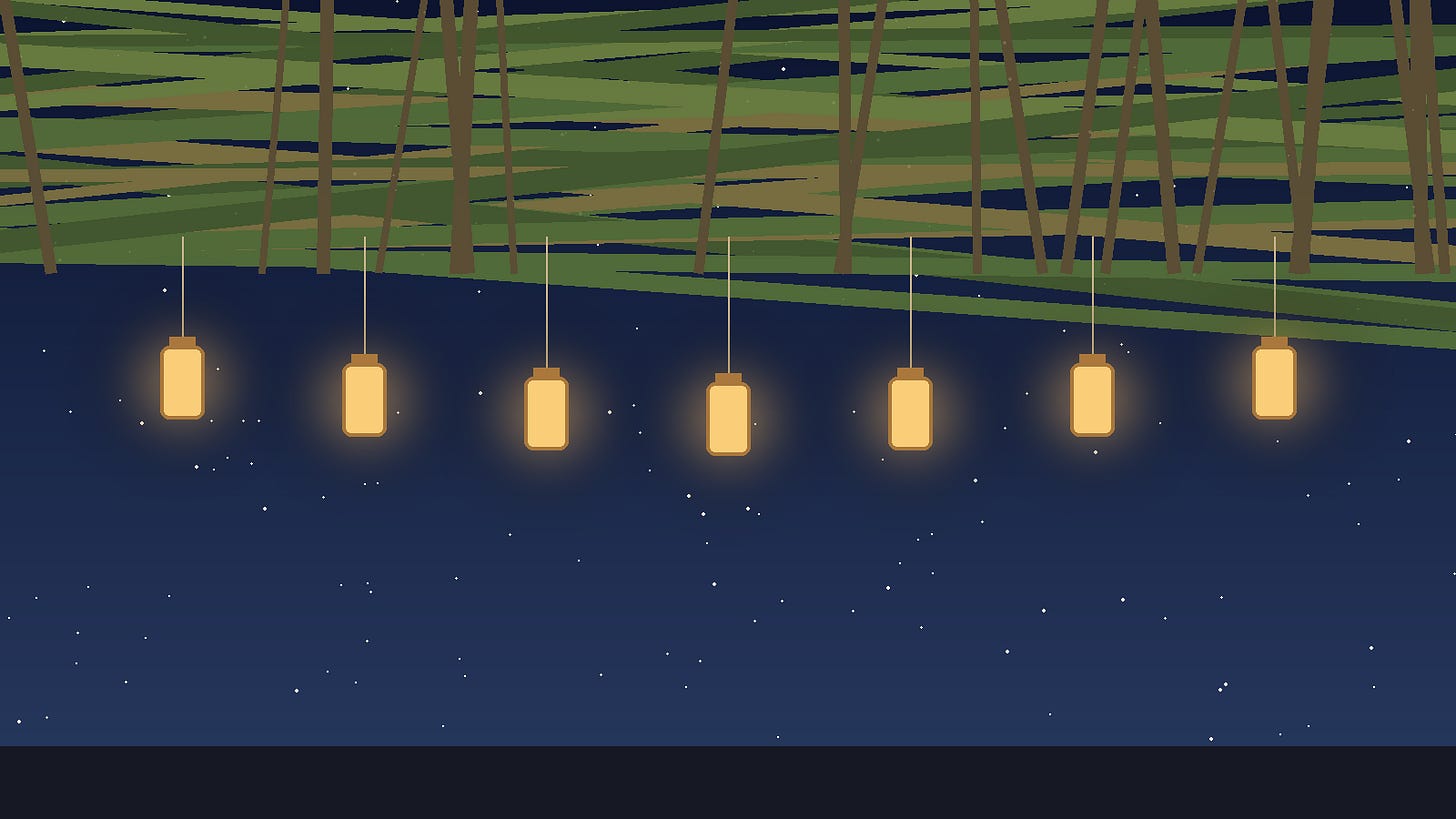
The very first law of the sukkah is about shade. The Mishnah rules that a sukkah whose sunlight is greater than its shade is invalid (Mishnah Sukkah 1:1, Sukkah 2a). The schach must cast more shade than it lets in sun. And ideally it is laid loosely enough that the stars can be seen through it. The roof is meant to protect, but not to seal. It gives shelter while leaving the sky open.
The Zohar gives the sukkah’s shade a name: tzila dimheimnuta, the shade of faith. When a person sits in the sukkah, the Zohar teaches, he sits in the shade of the Holy One, and the guests of the sukkah come to sit with him. The shade is not only the shade of the branches. It is the shade of trust.
The psalmist said it simply: “G-d is your guardian; G-d is your shade at your right hand” (Tehillim 121:5). The shade that keeps us is not a wall we built, not a treaty we signed, not a fleet we sent. It is the Presence we trust.
Total control
I want to be careful here. It is no small thing that a great power takes the danger in the Gulf seriously, and Israel has reason to be grateful for allies who stand with her. Nothing in the Torah asks us to be passive in the face of danger. The same people who sat in the sukkah in the wilderness also fought when they had to, and the same Torah that gives us the shade of faith commands us to guard our lives.
But the phrase “total control” gave me pause, not as a political matter, but as a spiritual one. The sukkah is the Torah’s annual answer to the dream of total control. It is a mitzvah we perform with our whole bodies, sitting and eating and sleeping in it, and its entire architecture is built to remind us that we are not in control. The walls can be canvas. The roof must be loose. The rain can send us indoors. A person who sits in a sukkah and imagines that he controls his fate has missed the point of the hut.
That is not a criticism of any leader. Leaders speak the language of power because that is their task. It is a reminder for us, the people who sit in the huts. We can be grateful for strength without placing our trust in it. We can welcome every guarantee of safety without mistaking it for the shade that actually keeps us.
The seventh day
Each night we pray, in the Hashkiveinu blessing, ufros aleinu sukkat shelomecha: “spread over us the sukkah of Your peace.” We do not ask G-d to build us a fortress of peace. We ask for a sukkah, a frail hut, because that is the kind of peace that depends on Him and not on us.
The prophet Amos promised that G-d would raise up “the fallen sukkah of David” (Amos 9:11). Not the fortress of David, not the palace of David, but his sukkah. The final redemption itself is described as a hut, lifted up by G-d’s hand.
This week the world will go on counting days. Proposals will be made and rejected. Deadlines will come and pass. We will pay attention, and we will pray for the safety of Israel and of those who stand with her. But in our huts we count a different seven, one that leads not to a deadline but to a crowning: seven days of dwelling, seven circuits on Hoshana Rabbah, and then the eighth day of Shemini Atzeret, when the King asks His children to stay a little longer.
Security that rests on control lasts as long as the control lasts. Security that rests on the shade of faith lasts as long as G-d does.
May He spread over us, and over all who seek peace, the sukkah of His peace.
Sources
Vayikra 23:42 (dwelling in booths seven days)
Mishnah Sukkah 1:1; Sukkah 2a (more shade than sun)
Mishnah Sukkah 4:5 (the willow circuits; seven on the seventh day)
Zohar, Emor 103a (the sukkah as tzila dimheimnuta, the shade of faith; the ushpizin)
Tehillim 121:5 (“G-d is your shade at your right hand”)
Amos 9:11 (“the fallen sukkah of David”)
The evening prayer, Hashkiveinu (“spread over us the sukkah of Your peace”)
All glory to the Ribono shel Olam · Errors are mine
Prepared in deep partnership and cooperation with Grok and xAI
Also published on Substack.